
The tangled emotions of grief
I received a phone call recently informing me that my brother had died. Shocking, yes. Sad, yes. Heartbreaking, yes. All of these things, and no surprise there, what did shock me was the tidal wave of other emotions and thoughts that followed on after the initial shock had subsided a little bit.

I felt resentment towards my late husband, Paul, who had caused the destruction of my relationship with Tony years previously, something I had never been able to claw back from in terms of rebuilding anything meaningful. Tony was autistic and lived in care in Cambridge, his only family was me and he’d had a very unhappy life from start to finish.
So, then I felt guilt, guilt that his life had been so lonely in spite of my best efforts when our father died. Tony didn’t have a diagnosis and had always lived with our father, when he died, Tony was expected to live in the big wide world, get a job and manage his own home and finances, this was impossible for him.
He went into a very deep depression and became suicidal, living in a tiny flat in an isolated village. I fought for an autism diagnosis and, finally, after 2 years, I succeeded, he was now in the system and we could move forward to try to get him the help he so desperately needed.
At first he was placed in a council care home for the elderly at the age of 43, it was a dark, dingy, melancholy place and his depression didn’t improve. I kept fighting for something more appropriate and eventually a purpose-built facility was being constructed near the centre of Cambridge (perfect for Tony) and he was offered a place there.
This was so different, light, bright, purpose-built flats with 24 hour staffing. His own kitchen, bathroom, bedroom and sitting room and the people available to come and cook with/for him, take him shopping and help him with his daily needs along with 7 other residents.
I can’t claim that he thrived there but he was certainly happier than he had been anywhere else in the previous 4 years, and he and the other 7 residents built some meaningful relationships with each other.
Due to my own circumstances I couldn’t visit him as often as I would have liked but I did my best until 4 years ago when he decided he wanted nothing more to do with me. His autism made him extremely stubborn and once he’d built a scenario in his head there was no changing it. I rang the care home from time to time to enquire about him but there was always the same answer, he wouldn’t let them tell me anything, they were only to contact me when he died.
I would have loved to have seen him one last time and try to mend the wounds of the past but, sadly, that opportunity has now passed, now I have to come to grips with my own emotions and make sense of the futility of falling out with someone you love and not getting the chance to say sorry.
I had the same situation with Paul’s mother who wholeheartedly blamed me for her sons suicide, she shut me out completely and therefore marred her (and her husbands) relationship with their grandchildren as well, she refused to see me so she couldn’t see the children, they were all young and needed me to take them to London to visit.
Fortunately, I had the opportunity to see Paul’s father on his own before he died and we had the chance to talk. He apologised for everything that had happened over the previous 9 years, telling me that it wasn’t what he’d wanted. I treasure those few minutes with him that enabled me to make my peace with him knowing that he never felt the grudge towards me that Paul’s mother had.
Sitting here now, writing this, I feel angry, guilty, sad, resentful, helpless, regretful and a whole host of other feelings. Writing this has helped a little but grief can be all consuming if we allow it to be, at some point we have to decide that it is what it is and we have to move on.
The tangled emotions don’t go away but one by one we manage to accept them and create some kind of peace, even if it’s an uneasy, tenuous peace. The sadness of the situation I was left with with my brother and Paul’s family will always haunt me, I know they weren’t of my doing but I still question whether I could have done more to prevent or mend them…I couldn’t, sadly.

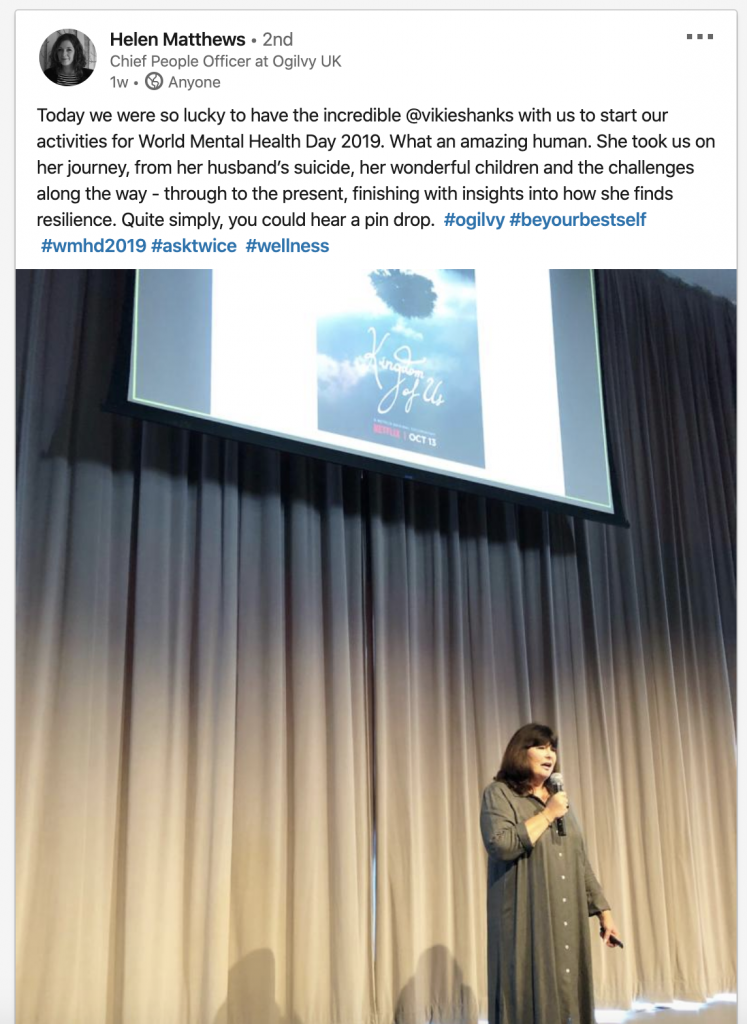
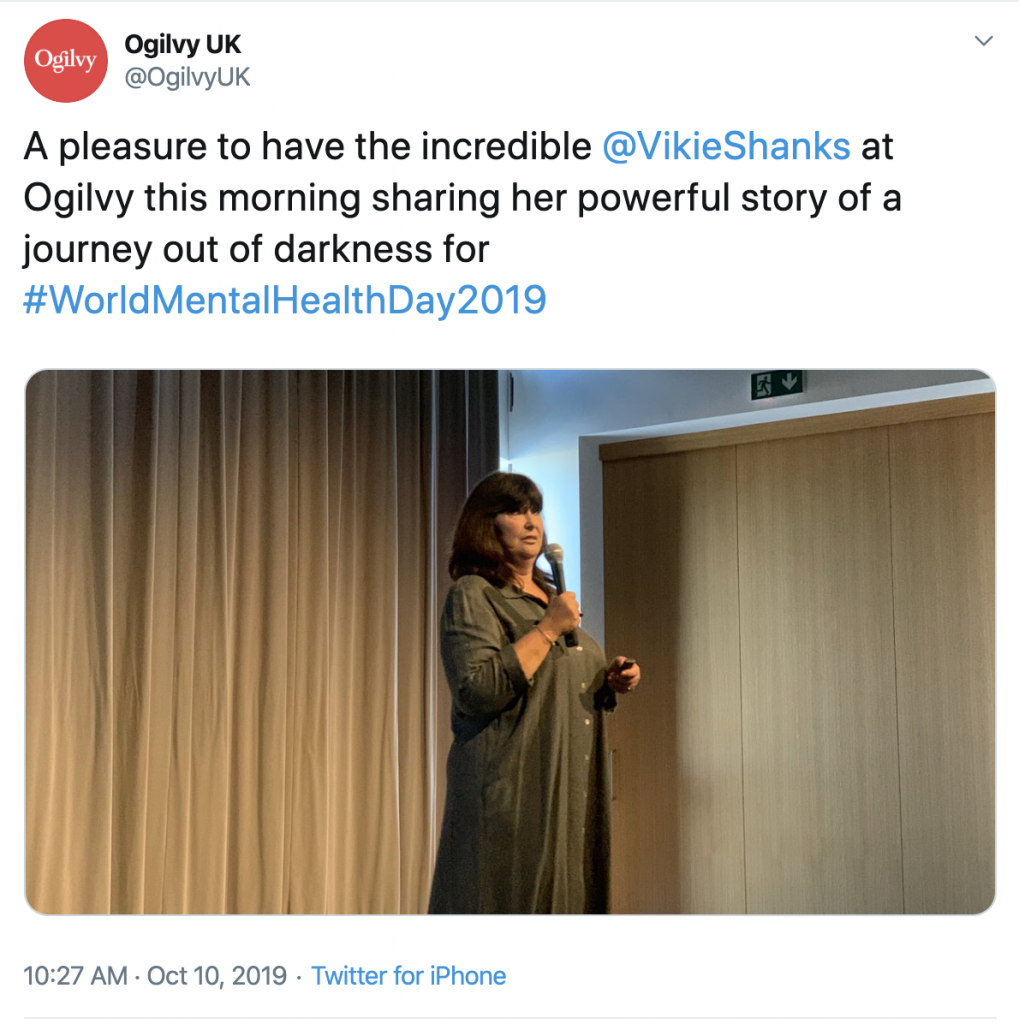
To dear vicki,
what an amazinly beautiful family.
I too lost my father to mental health, in 1977. He shot himself, i was not home , mum nana and my only sibling were all home when he went off. watching on netfixs your documentary make me thing how fortunate you all are to have so many movie, tapes and photos.
I was 11 yr old and only know basic information. I always wondered if i too would die at 33 yrs of age like my father. I’m 54 now and have 3 teen boys and a husband that seems to have vacant times in his day, as we get older and i learned to reconise his black moods i would step away and give him space. It has almost cost our marriage, in our earlier yrs. It has deffently changed our relationship.
mental health in Australia has deffently taken a turn for the better, but still huge gaps. i work in the disabilty sector, which teaches me just how fortunate my life is. the one thing that does help our teen boys is having a dog. pets do give us powerful companionship .
I’m very honourd you and your family shared your story. This was very emotional for me to watch, but was the very first time in my life to see how some else deals with the emotional train ride that we go though on a journey of suicide in a family. thank all of your beautiful family for being so brave and vicki, you have done a wonderfully perfect job as a women,mother and mentor for so many people.
kindest regards
kerry mcclelland
victoria
Australia.
Hi Kerry, Thank you for your beautiful words and I am so sorry you have had so much sadness in your life. We made the film in the hope that it may help other people in some way so messages like yours are very important to us, thank you for getting in touch. I wish you love and hugs…Vikie xxx