
20 Clues that your child (or you) might be on the Autistic Spectrum
Firstly, let me put some facts out there about being autistic. It’s not a death sentence, it doesn’t mean a person will never achieve anything in their life, it doesn’t mean they will be lost and lonely their entire life.
It just means a brain that is differently wired and if nurtured in the right way will develop into incredible awesomeness!

One thing to note though, is that girls and boys on the spectrum will present in different ways which is why so many girls slip through the diagnostic net.
The generally held belief is that four boys are autistic for every one girl. I would very strongly contest these figures after years of running my autism support group and being around large numbers of autistic people and eventually I believe the figure will be adjusted to pretty much 50/50.
The signs in girls are much more subtle than in boys so don’t write off your child being on the spectrum just because she’s a girl and ‘doesn’t look autistic’.
Being autistic in 2019 is fantastic, thanks to the internet, social media etc… Autistic people have created their own societies where they appreciate their differences, share their knowledge, celebrate their uniqueness and support each other whilst living in a world that doesn’t understand them, and, more importantly, that they struggle to understand.
It’s time we stop seeing the word ‘autism’ as being a bad thing and appreciate that it just means ‘different’, in a good way. Without autistic people we wouldn’t have so many of the wonderful things we enjoy in our modern world, and I could reel off a great long list and bore everyone to tears, but that’s maybe for another time.
In the meantime, start seeing autism as the precious gift that it is and let’s talk about some of the signs that may mean your child (or you!) might be on the spectrum!
1. Stimming
Stimming comes in many shapes and sizes. Nikita was a leaping around on the furniture, twirling kind of ‘stimmer’, she needed the movement and sensation of bouncing off things to satisfy her sensory needs. For Lorie, stimming came in the form of watching ‘Free Willy’ incessantly, more of a visual/auditory type of stimming.
For Pippa it was Lava Lamps, glitter in water etc…, a visual type of stimming again. Anything that creates a pleasant sensory experience is a form of stimming so keep an eye out for your child stimming in some way, but don’t base your assumption about them being on the spectrum on this one thing, a lot of children ‘stim’ just because they’re young and it fulfils some type of physical security/comfort need.
2. Food Fads
Again, anomalies regarding food can come in many forms and in very young children don’t necessarily point to a child being autistic, we’re looking at the whole picture here. However, if your child doesn’t like their food touching on their plate, they eat each item separately from each other (ie all the carrots, then all of the potatoes then all of the protein), don’t like foods with a certain texture, or even colour, then it’s another sign that may point to sensory issues and therefore a possible clue that your child may be on the spectrum.
Another typically autistic thing with food is what the autistic community call ‘samefood’, the desire to eat the same thing over and over again. The preferred ‘samefood’ can change and even become something they didn’t like before, but, it must remain exactly the same in terms of preparation, presentation etc… I once made the mistake of buying a different (posh) pasta sauce and faced the wrath of Osborn who smelt the difference the moment the jar clicked open from his bedroom upstairs and came down to tell me, in no uncertain terms, that it wasn’t right. I had to go out and buy the usual one!

3. Eye Contact
There is a generally ill perceived myth that people on the spectrum can’t look you straight in the eye. Whilst this is true of many people on the spectrum (looking you in the eye makes them squirm) there are other autists that are either not stressed out by eye contact or have taught themselves to manage it because it’s deemed ‘normal’.
So, whilst there may be an element of truth in this one it certainly isn’t a factor that should be considered on its own.

4. Tactile Sensitivities
These can vary widely from person to person but common ones are labels in clothes, fabrics like corduroy and velvet, high collars, fabrics with unusual textures and the change from summer to winter clothes. Mirie would wear a vest all year round, even in the hottest weather and it was impossible to stop her, I even tried hiding all of her vests so she couldn’t wear them in the heat, she just nicked someone else’s vest!
Getting Osborn into shorts in the summer would take a huge amount of effort and I remember one year getting him into them in a really intense heatwave only to have to try and get him back into long trousers a few weeks later when a very early cold winter came along. Labels in clothes were another huge challenge and socks with seams along the toes, and don’t even get me started on Pippa and velvet and corduroy!…the list goes on. I became very adept at finding solutions to these challenges for everyone’s sake.

5. Repetitive Actions
Very much like stimming but maybe not as obvious.

6. Lining things up
A lot of people on the spectrum enjoy putting items in order, or, creating order out of chaos, my daughter Pippa loves nothing better than untangling wool! Don’t make the mistake of assuming your child is on the spectrum just because they line their cars up at the age of two though. A lot of toddlers enjoy a good mix of chaos with a touch of order thrown in just to confuse their parents!

7. Severe reaction to scent
Hypersensitivity to certain smells can be severe enough to cause a person to experience actual, extreme, physical pain. My son, Osborn, couldn’t tolerate perfume and body spray, living with seven women wasn’t helpful for him but the girls were all very sensitive to his struggles and wouldn’t spray in his vicinity. However, I remember one morning, Kacie stepping outside the back door to spray and as she came back inside, the scent wafted back in with her! The reaction from Osborn was instant and extreme, I felt so sorry for both of them, Kacie had tried so hard but it wasn’t Osborn’s fault that he couldn’t tolerate it.

8. Metldowns for no apparent reason
This can be a very tricky one and sometimes you will be left still having no clue what triggered the meltdown. The challenge with meltdowns is that they often accompany shutdowns so the person who is struggling can’t actually communicate with you what the problem is.
One such incident we encountered was when Nikita was about three years old and didn’t have a lot of language anyway. We were at a market just before Christmas which was held in several old farming market buildings, as we left one and entered another, Nikita stopped dead and screamed. She was so incredibly distressed that it was heart breaking to watch, we all looked around and eventually realised that the cause of her extreme distress was the sight of dead Turkeys hanging against the wall. My children have been raised as vegetarians and I don’t think Nikita had ever seen a dead animal of any kind so it’s no wonder that the sight of a hundred birds hanging upside down with their heads still intact was too much for her.
9. Shutting down
Children/people on the Spectrum often ‘shut down’, it’s a coping mechanism for when the situation they’re in becomes so extremely stressful that their body literally stops working. They can’t speak, they often can’t move and they may not be able to tolerate any physical contact.
Very often the only way forward is to leave them to come back on their own without interference as this can often make things worse, but I would suggest keeping an eye on them, we’ve had more than one occasion when one of my children in ‘shutdown’ has wandered off.

10. Not joining in at group session
In group play sessions or parties, if your child prefers to be on the outskirts doing their own thing (climbing on chairs, running around etc..) it may be a sign that they are on the autistic spectrum. Groups of people can be overwhelming for them and their difficulties in following social rules makes it even harder, they can also struggle with the concept of taking turns and find it hard to wait. They may also find it difficult to follow instructions in a group setting because of the level of distraction or sensory issues that add to their anxiety levels.

11.Obsessive behaviours
Children often have a favourite toy or blanket and this is perfectly normal for a small child and can offer them a huge amount of security, but if your child latches onto unusual items like a particular ball, party bag etc… and becomes distressed when they don’t have it, it may be another sign that your child may be on the spectrum.
12. Taking things literally
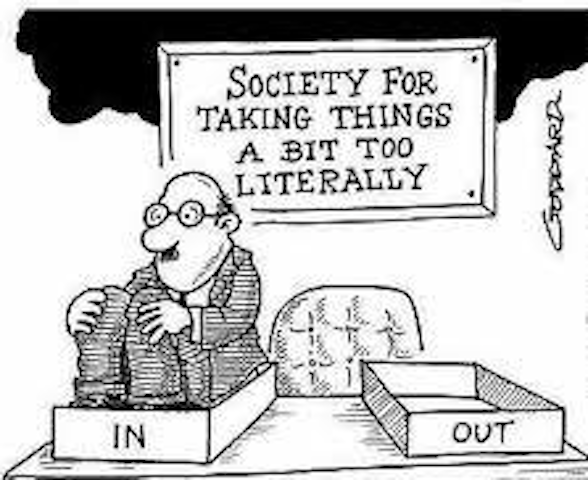
This was, and still is, a big one in our house and led to some very funny, but also some pretty dangerous situations. Learning to ask questions in an unambiguous way is a skill but a good one to learn, I’ll give you a couple of examples both involving Lorie:
When she was 3 she was swinging between two chairs in the sitting room and allowing herself go further and further, it was inevitable that she was going to fall so I pointed this out to her in the hope that she would stop. Instead, she chose to go at it even harder and, of course, fell and landed on her head. I picked her up and cuddled her and asked her where she hit, meaning on her head, obviously I had seen it happen and knew that she’d bumped her head on the floor. She immediately pointed at the floor and said ‘the floor!’! I changed my question to ‘where on your head have you bumped’ and she then showed me, I hadn’t asked a clear enough question!
Another incident, when she about 14, (just to show that this doesn’t go away!), we were on the morning school run which involved dropping the children at 4 different schools and we were always late in spite of my best efforts to prevent it. On the route was a corner where I would sometimes stop to let the older ones get out quickly so that I could take the right turn to get to the other schools, this wasn’t unusual. This one morning we were particularly late and said to the older girls ‘you’re just going to have to jump out’, meaning that I would stop at the corner as always and let them jump out. Lorie immediately grabbed the door handle and started to open the car door! I grabbed her arm and asked her what she was doing? She said, ‘you said we had to jump out’, I replied “but I was still moving?!’, she looked at me with a puzzled expression and said ‘oh, I thought it was weird’.
Clarity in all things will help your child!
13. Limited social boundaries
Because people on the autistic spectrum struggle to understand social boundaries they will often do things that they see as totally ok but could be perceived by the rest of the world to be very wrong! A simple example is with Lorie again, she was about 4 and we were at a local fete where the prize on some of the stalls was a giant inflatable hammer. She was having great fun hitting myself, her siblings and a friend of mine over the head with it, all good, painless fun! We wandered over to the swing boats where there was no queue and Lorie walked up to the elderly gentleman running them and smacked him on the head with her hammer. In her head this was perfectly ok as she’d been doing it to everyone else, it didn’t enter her head that she shouldn’t do it to complete strangers. The gentleman in question was a very uptight military type of man and he was definitely NOT amused and put Lorie (and me and my parenting skills) in their place. I remember sitting under a huge Oak tree as I tried to explain to her why she shouldn’t hit people she didn’t know but could hit people she did know. It was tricky!
Their limited social boundaries also explains why they can attend a party where everyone else is following the rules and playing games and they feel no need to conform and join in, they’re quite happy doing their own thing blissfully unaware that they should be doing anything different.

14. Communication difficulties
Sometimes children on the spectrum can be slow to start talking, this may be down a number of things but sometimes it’s just because their brain is struggling to process information.
My own children all have their own unique communication anomalies, Jamie has challenges expressing her thoughts succinctly and will often say the same thing over and over again and also use far more words than necessary. It’s an endearing trait but can make coherent communication with her difficult. Nikita, on the other hand has receptive language challenges, she struggles to understand what’s being said to her unless it’s very clear and concise. She tells me that when she was younger (and still to this day) words just sound like a slur, she finds it hard to discern the individual words and, therefore, follow a conversation.
15. Little or no pointing
My children don’t point! Over the years I’ve got used to trying to work out what it is they want me to see without any visual clues even though it’s very difficult! If I’m lucky they may wave their hand in some vague direction, but generally, nothing. I’ve asked them why this is and they all have similar answers, either I should be able to see which way they’re looking and be able to work it out (the obvious flaw in this one is that there is no indication of distance!).
The other answer is that they assume I know what’s in their head and therefore shouldn’t need to be told! Nikita was 20 when we were travelling in the car and she asked me what something was, bewildered I looked all around but had no idea where to look! Inevitably I missed whatever it was and she was upset, I then spent the rest of the journey home teaching her how to point, near pointing, middle distance pointing and distance pointing. She kind of got it but still doesn’t point to this day!

16. Synesthesia
‘Synesthesia is a condition in which one sense (for example, hearing) is simultaneously perceived as if by one or more additional senses such as sight. Another form of synesthesia joins objects such as letters, shapes, numbers or people’s names with a sensory perception such as smell, colour or flavour’
I took this definition from Google in order to have something succinct to describe this fascinating condition. I love listening to my children tell me what colour, shape, smell or object a number or letter is, for Osborn the number 88 was 2 blue whales!

17. Repeating words and phrases
This is very common in children on the spectrum and those of mine who did it don’t actually know why but it’s called Echolalia. I gather it was a form of stimming as they all said they gained comfort from repeating my words and sentences, they certainly weren’t trying to be annoying. It may have also served to help with their language skills but they certainly weren’t aware of this being an educational activity, it just gave them a warm, fuzzy feeling! Repeating the words you’ve just said also buys them time to process whether this is a question so this may be another reason why people do it.

18. Rituals and Habits
Children on the spectrum have a lot of rituals and actions that they perform in exactly the same way all the time, you may not even be aware of a lot of them unless you watch closely at how they eat their food, put their clothes on, count their footsteps or look down their nose amongst a million others!
One day I saw Nikita staring straight ahead of her, moving her head in peculiar directions and almost going cross eyed. I watched her for a while and then my curiosity got the better of me and I had to ask what she was doing? She told me that she had to line up the side of her nose with whatever she was looking at, hence the strange head movements as she tried to focus on the vague image of the side of her nose and then tried to make it line up with an object. She often looked very odd for quite a few years before she stopped this one.
Osborn went through a phase of having to count every single step he took, it was exhausting but he had to do it and it explained why he was often so preoccupied, this went on for a few years before he managed to stop it.
When Mirie came to say goodnight to me she would close the door and stamp three times to which I had to shout ‘Goodnight’. I could go on forever with examples but none of these things will make sense to you but they are very important to the person on the spectrum so accept them.

19. Sensory Issues
Just a quick note on sensory issues here. You don’t have to be autistic to have sensory challenges, it’s another myth that needs to be exploded. Many people have issues with certain senses, maybe textures or smells, sensory issues do NOT automatically point to autism.

20. Inappropriate emotional reactions
Because people on the spectrum struggle to interpret voice tone, facial expression and body language they will often react to situations in a way that appears to be totally inappropriate. The may laugh when they are being told off or burst into tears when complimented because they have missed the nuances of the situation or because they are nervous. This can cause challenges in communication, obviously if you are trying to let your child know that something they have done is not ok and they laugh at you you’re going to, naturally, become upset.
Try to understand that these inappropriate reactions are not disrespect and it’s a good idea to try and explain why their reaction isn’t ok. Patience is required though because communication can be tricky (a whole different subject that I’ll cover in another article).

All of the above are guides only, every young child behaves in erratic ways so diagnosis under the age of 4 is very difficult unless the child is experiencing severe challenges and is obviously autistic from a very young age. A child who is mildly autistic and especially if they are a girl is far less likely to get an early diagnosis so my advice would be to understand that they may be, do some research, learn the difference with your own child between something they NEED in order to help with their anxiety and when they are being a typical toddler working out where the boundaries are.
Keep a log of all behaviours that you feel may suggest they are autistic and note what is happening when they go in to meltdown or shutdown, especially anything to do with sensory reactions. Maybe your child reacts badly to the doorbell or the dog barking or maybe they get upset when you spray perfume? All of these clues will be extremely useful when the time comes for a formal diagnosis.
Also, watch their behaviour, do they line things up, do they flap or stim, do they join in at clubs or groups, do they react badly to certain textures (food or otherwise), see it as piecing together a jigsaw puzzle and remember, not all children are the same and your child may show signs of some of the above and not others. And just because your child makes eye contact doesn’t mean they are not on the spectrum, there are a lot of myths around, everything doesn’t apply to everyone!
If you suspect you or your child may be on the spectrum I’m happy to chat with you to see how I can help. Do get in touch.
Film: ‘Kingdom of Us’ on Netflix Trailer here: https://www.youtube.com/watch?v=fc8_spETMBY&t=3s
Book: Unravelled on Amazon Link here: https://www.amazon.co.uk/Unravelled-inspirational-story-journey-darkness-ebook/dp/B00L1ENC0O/ref=tmm_kin_swatch_0?_encoding=UTF8&qid=1559901911&sr=8-1
TED Talk: Youtube Link here:https://www.youtube.com/watch?v=Xts1F-PoUNA&t=59s

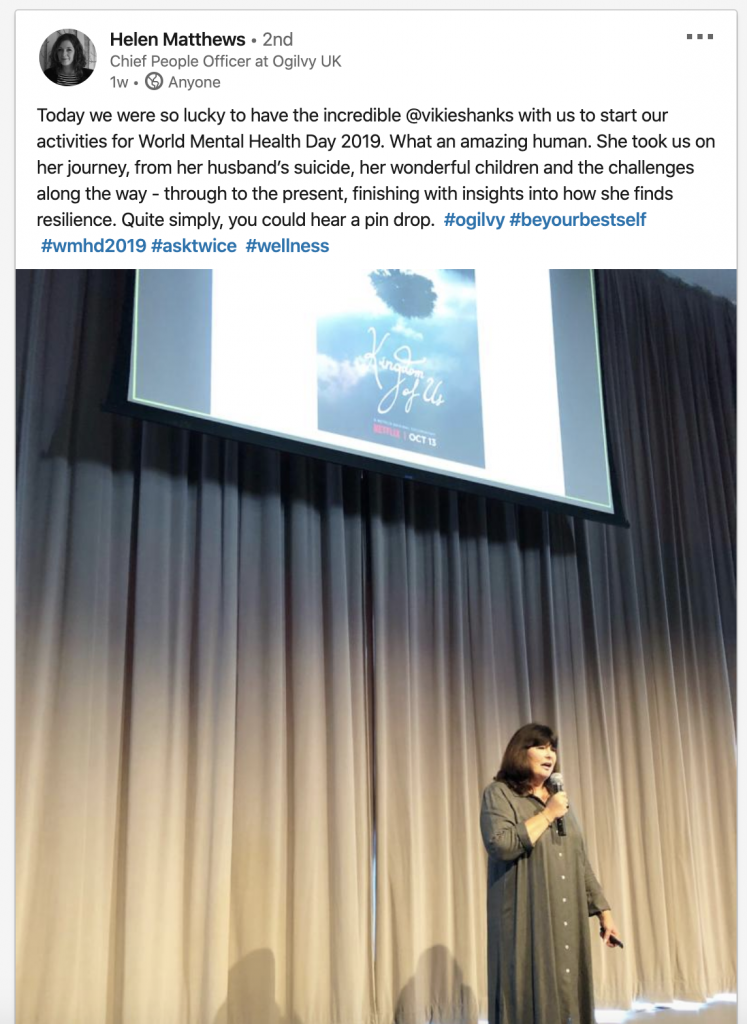

This is me 100%! I’m 44 and I’ve struggled since I was a kid with each and every one of these. I’m a single mother of 2 ages 14 and 7. I too have thought about suicide countless times. To be honest I’ve thought about murder-suicide as well. I feel like I haven’t built up the courage at this point. I try not to think about it even being an option. But I can’t get help. I get counselors and medication from a nurse practitioner but I’m not getting better! I feel hopeless. It’s affecting my kids and I feel there are no options. I don’t know what to do any more. In watching your family’s documentary it hit home. Once I watched Kingdom of Us I googled you and found this blog as well as followed you on Instagram. I’ll be researching more of you and your great family. It’s bitter sweet to FINALLY know that I can relate to a possible condition/gift as you call it. You may never read this Vikie but in any event that you do…please know that you gave me a shimmer of hope. I’m not sure my next step or if there will be one. I see these “Clues” you mention in my kids as well and I can only hope and pray that we ALL can get help….one day. Thank you for all that you are doing for those in the spectrum and their families! I’m sorry that you and your children had to go thru all of this. AGAIN I THANK YOU AND GOD BLESS YOU!
*Suicide runs in my family.
**I’ve been diagnosed with PTSD (from an abusive childhood and relationship), depression and anxiety.
Hi Jessica, I’m so sorry to hear that you’re not getting the help you need. You don’t say where you live but if it’s in the UK there’s a drive at the moment to diagnose adults, this may be the best way to get help for your children as autism often runs in families. Our story is proof that autism isn’t the terrible thing many perceive it to be and if you know you’re on the spectrum you have a much better chance of understanding yourself and creating strategies to help. Do watch my TED talk called ‘Why my autistic children don’t need a cure’, it tells the story of my daughter, Nikita, who I was told would never lead a normal life and would need to live is residential care, she just graduated from university with a 2:1. Never lose hope Jessica and I wish you all the best for the future. Vikie xxxxx
Hi Vickie i am grandma to beautiful 2yr old Reuben who i am definitely sure has autism. Reuben was born with congenital heart defect that required open heart surgery at the age of 3months and he will require further surgery when he is in his teens. He is a healthy happy little boy despite his heart problems. From being a few months old we picked up things in his behaviour that alerted us that he may have problems. The main issues now that point to it are 1) he does not respond to his name. 2) he doesn t engage in any joint attention . 3) he doesn t respond emotionally to others. 5) he does not engage in pretend play in fact he doesn t play at all be wanders around from room to room, he rarely sits down. His favourite thing is holding a mobile phone watching cartoons, he constantly flicks over the page.
1) he hand flaps 1) he avoids eye contact 3) he bites 4) he doesn’t speak only makes loud noises and giggles alot. 5)he has food issues and doesn’t like certain textures 6) he kisses and licks the floor and everything still goes in his mouth. 7) he is very unsteady walking. 8) he has lost skill he previously knew.
There are many more issues but far to many to list.
Reuben is a very very happy little boy he never cries unless in pain .
We are convinced he is autistic but despite voicing our concerns to health visitor and gp we are unable to get any advice on what to do or where to go for help, we feel that the earlier we can can him the help he needs the better his future will be. Any advice will be greatly appreciated. Thank-you sue.
Hi Sue,
Have you also been to your GP with your grandson? You have a long list of behaviours that would appear to point to autism, I would suggest you go to your GP with a list of why you believe he may be autistic and ask for a referral to CAMHS. The waiting list is long depending on where you live but in the meantime, assume he is on the spectrum and treat him as such and learn as much as can. Beware of some of the things you’ll read on the internet and check that it’s accurate. I wish you and Reuben well and watch my TED Talk called ‘Why my Autistic Children don’t nee a cure’ on Youtube, it will give you hope for the future Vikie xxxx
Hi Vicki,
I’m a 51 yr. old Mother of two boys. Ever since I can remember I find a need to count steps, words in sentences, even the number of of tiles and kitchen cabinets, everything and the totals all must be even or I have to add something else or re-count. The number of syllables in a sentence also need to be an even number. When I was around 10 I asked my sisters if they had same and all 4 of us somehow have the same issues.
All four of us have dealt with depression and I have adult ADD and my son has ADHD.
how can I get a definite diagnosis as I feel it’s getting worse but somewhat manageable.
Hi Diana, You don’t say where you live but if you’re in the UK you can go to your GP and ask for an assessment. I think a proper diagnosis is often very useful if you can understand why you struggle with certain things it makes it easier to search for answers and strategies to help. I do hope you get the help you need xx
Wow!!
Thanks Vikie.
This describes a lot of the signs I saw in my son but had no understanding of what they meant till most recently.
I hope to share this with his school so they too can understand better and not keep labelling him as being difficult.
Hi Vikie,
I just watcher your doco on Netflix and loved it, thank you so much 🙂
I have 3 children , a 7 yr old ASD, ADHD boy, a 9 yr old gitl and a 13 yr old girl with ADHD and Anxiety. I wondered at what ages your girls were diagnosed with Autism ? as I really wonder if there is alot more going on for my 13 yr old and if she may also be on the spectrum and slipping through the cracks.
Hi Nicola, Mine were all diagnosed around the age of 4 but a lot of girls do slip through the cracks as they are so good at masking. I would seek diagnosis so you have a clearer idea of how to help her x